
Special Session 12
English: Virtual Reality for Education: Learning Design and Intelligent Support
Description
Virtual reality is driving profound transformation in
education. By constructing immersive, interactive, and
experiential learning environments, VR opens up new avenues
for knowledge transfer, skill development, and enhanced
learning experiences. With the rapid advancement and
convergence of extended reality, artificial intelligence,
learning analytics, and spatial computing, education is
progressively moving toward a more intelligent,
personalized, and data-driven stage of development.
This Special Session aims to bring together cutting-edge
research on VR applications in education, focusing on core
topics including instructional design, learning
effectiveness, intelligent support, and systematic
assessment. It seeks to foster deep integration of
technological innovation and educational practice, offering
novel perspectives and approaches for optimizing and
reimagining future educational models. The session welcomes
original research, systematic reviews, design-based studies,
and empirical evaluations across diverse educational
settings, including K–12, higher education, STEM education,
vocational training, and lifelong learning. We cordially
invite researchers, educators, and technology developers
from around the world to engage in interdisciplinary
dialogue and collaborative innovation, advancing VR in
education from technology-driven initiatives toward
evidence-based and human-centered paradigms.
Session organizers
Assoc. Prof. Xing Li, Jianghan University, China
Assoc. Prof. Lu Xu, Jianghan University, China
Assoc. Prof. Di Ai, Jianghan University, China
The topics of interest include, but are not limited to:
▪ Learning Design for Immersive Education
▪ Learning Effectiveness and Assessment in Virtual Reality
▪ Collaborative and Social Learning in Virtual Reality
▪ Virtual Reality for STEM and Professional Education
▪ AI-Supported Virtual Reality Learning
▪ Learning Analytics in Immersive Learning
▪ Emerging XR Technologies for Education
Submission method
Submit your Full Paper (no less than 5 pages with two
colums) or your paper abstract-without publication (200-400
words) via
Online Submission System, then choose Special
Session 12 (English: Virtual Reality for Education: Learning Design and Intelligent Support)
Template
Download
Introduction of session organizer
 Assoc. Prof. Xing Li
Jianghan University, China
Dr. Xing Li is an Associate Professor, Master’s Supervisor,
and a Visiting Scholar at The Ohio State University, USA.
She received her Ph.D. from Central China Normal University
and her Master’s degree from The Ohio State University. Her
current research focuses on designing, developing, and
integrating STEM education with intelligent technologies
within digital learning environments empowered by Virtual
Reality (VR) and AI-generated content (AIGC), exploring how
immersive learning experiences can foster students‘
computational thinking and problem-solving abilities,
thereby improving learning outcomes and educational quality.
She has led or participated in over ten national and
provincial-level research and teaching reform projects, and
has published more than twenty papers in SSCI-, CSSCI-, and
EI-indexed core journals. She is the sole author of an
academic monograph and has received the First Prize of the
Wuhan Municipal Education Planning Outstanding Paper Award
and the Wuhan Municipal Social Science Excellence Award. She
has also contributed to nearly ten textbooks and
coursebooks, serves as the leader of a provincial
first-class course, and was awarded the Second Prize in the
Hubei Provincial Teaching Innovation Competition. She has
delivered dozens of presentations at international
conferences including the AECT (Association for Educational
Communications and Technology) Annual Convention, the HKAECT
(Hong Kong Association for Educational Communications and
Technology) Conference, and the GCCCE (Global Chinese
Conference on Computers in Education).
 Assoc. Prof. Lu Xu
Jianghan University, China
Lu Xu, Ph.D. in Educational Economics, Associate Professor,
Master’s Supervisor. She earned her doctorate from the
Department of Educational Economics, School of Education,
Central China Normal University. Her current research
focuses on learning behaviors and effectiveness evaluation
in immersive education, as well as basic education policy.
She has presided over 3 national and
provincial/ministerial-level research projects and 3
bureau-level projects, and has participated as a key member
in 5 national-level projects, including one major research
project of the Ministry of Education. She has published over
20 academic papers in domestic and international journals
such as Education and Economy, Journal of the Chinese
Society of Education, Journal of Central China Normal
University (Humanities and Social Sciences), and SAGE Open.
One of her papers has been reprinted in full by Xinhua
Digest, and another by the Renmin University Copy Center.
She is the sole author of one academic monograph. Her awards
include the Second Prize of the 6th National Outstanding
Achievement Award in Educational Science Research, the Third
Prize of the Hubei Provincial Party Building Research
Outstanding Achievement Award, and the First Prize of the
Wuhan Municipal Educational Science Planning Outstanding
Paper Award.
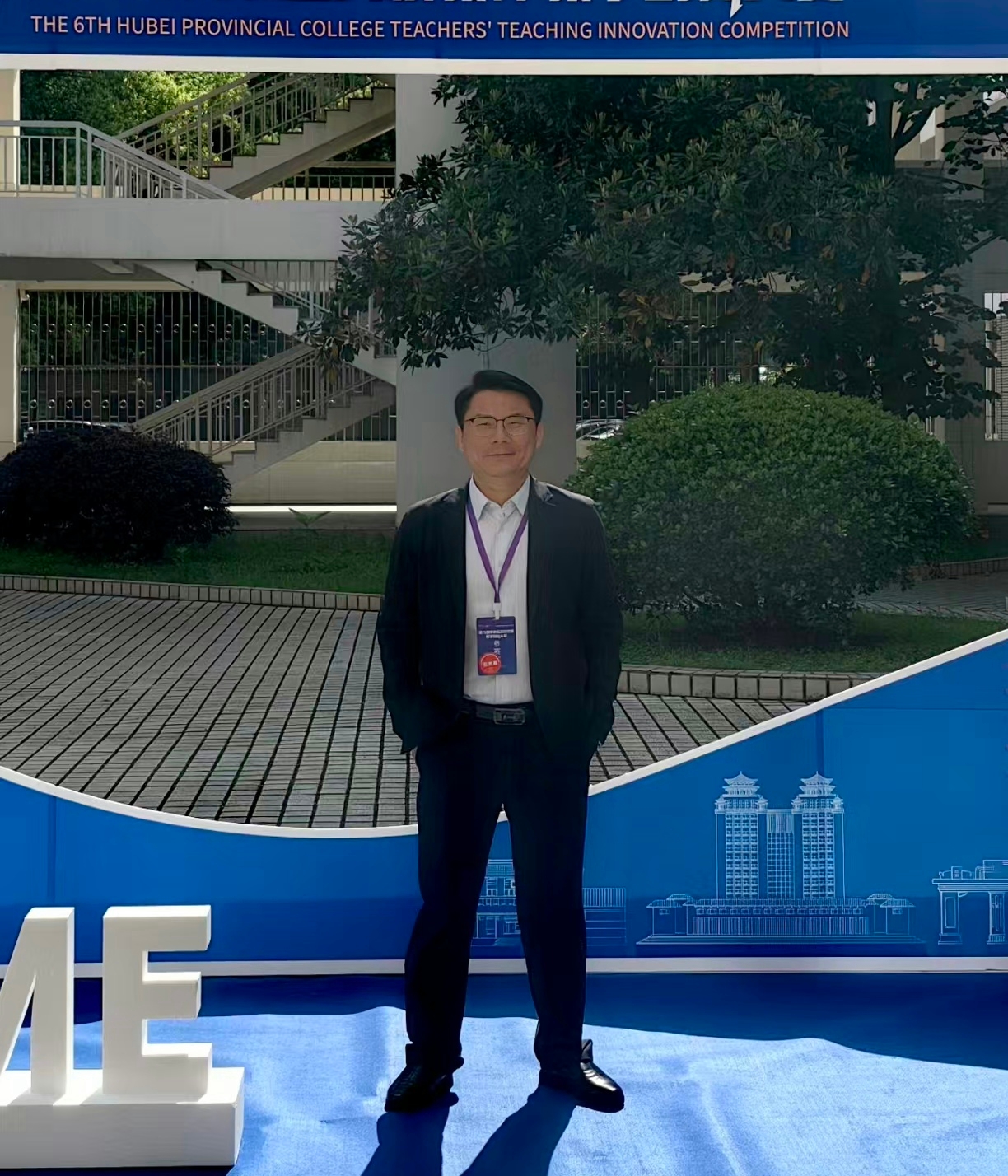 Assoc. Prof. Di Ai
Jianghan University, China
Di Ai is an Associate Professor and Master's Supervisor at
Jianghan University. He received his Master's degree from
Central China Normal University and was a Visiting Scholar
at Kent State University, USA. His teaching and research
interests focus on Virtual Reality and Intelligent
Interaction Technology. He serves as the head of a
Provincial First-Class Undergraduate Course. He is a
recipient of Second and Third Prizes in the Hubei Provincial
Teaching Innovation Competition for University Teachers, and
has been honored with the Jianghan University Teaching
Quality Award and Teaching Achievement Award on multiple
occasions. He has authored two professional textbooks as
chief editor, participated in multiple provincial and
municipal research and teaching projects, and published over
ten academic papers. Under his mentorship, students have won
more than 20 national awards and nearly 100 provincial-level
or above honors in academic competitions.